Articles Posted in Wrongful Death

Published on:

On November 7, 2012, Kyle Coleman was arrested and indicted in the parasailing accident which caused the death of Bernice Kraftcheck. Almost a year ago to the day, Coleman, 32, was the captain of a small boat Turtle, in charge of performing parasailing excursions for Caribbean Watersports & Tours, a corporation based out of the U.S. Virgin Island.

Bernice Kraftcheck and her daughter Danielle Haese were on a Celebrity Cruise at the time, aboard the Celebrity Eclipse. They purchased the St. Thomas shore excursion aboard the cruise ship. According to the indictment, when the mother/daughter tandem was lifted up in the parasail, the wind conditions were deteriorating rapidly. Within minutes, the tow-line broke due to increasingly strong winds, and caused the parasail and its two occupants to plummet from the sky and crash into the water. The force of the wind and the water condition were such that the parasail was continuously propelled and dragged the two passengers for several minutes, causing the death of Bernice and serious injuries to her daughter Danielle.
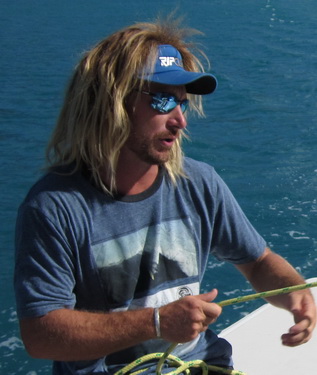
Kyle Coleman.jpgSince these tragic events took place last November, the Coast Guard performed a meticulous investigation by marine casualty investigators and special agents from San Juan. The Coast Guard inspected the vessel and found numerous inadequacies, including an inadequate tow-line, and deficient vessel equipment. The master on the vessel was also unlicensed at the time of the incident. Based on these findings and countless witness accounts, Coleman was arrested and charged by a federal grand jury with being responsible for the accident. The one-count indictment is pursuant to 18 U.S.C.A. § 1115. Misconduct or neglect of ship officers. The statute provides in part that a captain employed on a vessel, by whose misconduct, negligence, or inattention to his duties, the life of any person is destroyed, shall be fined or imprisoned not more than ten years, or both.
Published on:

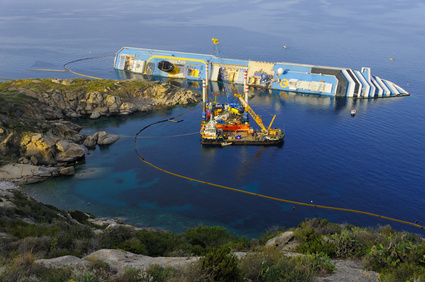
This week in Rome, court-appointed experts have presented their 270-page analysis on what truly happened on the evening of January 13, 2012, which saw the cruise liner Costa Concordia hit rocks off the Tuscan island of Giglio and finished its course beached on its size. As a result of a series of the captain’s reckless decisions and Costa Cruise Lines’ incompetent employees, 32 people died that night.

concordiarecent.jpgYou can read Cruise Ship Lawyers Blog’s entire account and article on the incident of Costa Concordia here.

The court overseeing the criminal investigation in Rome, Italy, had named and ordered several experts to review the audio and navigational data extracted from the ship’s black box. On Thursday, experts turned in their extensive report to the court, which was leaked the same day in the Italian press.

Published on:

As last reported two months ago, Leesfield & Partners filed a lawsuit against Princess Cruises on June 5, 2012, on behalf of Fernando Osorio’s parents in the United States District Court Southern District of Florida. The lawsuit is based upon the death of Fernando amd asserts Princess Star’s failure to rescue his vessel in distress, the Fifty Cent, after its crew was alerted by three passengers that they had spotted a small boat adrift over 125 miles from shore, whose occupants were signaling for help.

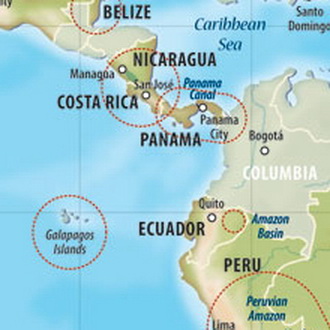
Fernando Osorio, Adrian Vasquez and Elvis Diaz were fishing off the coast of Rio Hato, Panama, when the engine of the 26-foot panga boat broke down. After being adrift for 15 days and 14 nights without power, the three occupants saw a cruise ship in the middle of the ocean and began signaling and waving t-shirts and life jackets in an attempt to be seen by someone on the large cruise ship.

jeff_gilligan.jpgTheir wish came true when several cruise passengers spotted the three men and the Fifty Cent. The passengers, who were using optical equipment to look for birds alerted a crew member who they asked to alert the Captain immediately. As the passengers listened on, the crew member called the bridge and advised of the disabled boat. During the process, they also showed the crew member the distressed vessel through their optical gear, and he confirmed to them he had seen the same thing they had. To their dismay, nothing happened.

Published on:

The fate of Captain Francesco Schettino of the doomed Costa Concordia cruise ship seems more and more certain with each new piece of evidence is released by the Italian prosecutors.

Cruise Ship Lawyers Blog has covered this incident from the beginning. At first, it was confirmed that Captain Schettino abandoned his ship before all cruise passengers were rescued and safe. Then, the investigators revealed that the Captain delayed the evacuation of the ship and caused the disappearance of more than three dozens of passengers.

The black box of the Costa Concordia was recovered not long after the tragedy took place and members of the public are now being shown what happened on the bridge of the ship as tragedy occurred.

Published on:

We previously reported on the incident that led to the death of 16-year-old Fernando Osorio Rodriguez, who died at sea, five days after his drifting boat came in close contact with the Star Princess, ship operated by Princess Cruises, which failed to render aid to the boat in distress.

On June 5, 2012, as published in the Miami Herald, Leesfield & Partners sued Princess Cruises and filed its complaint on behalf of Fernando Osorio’s parents in the United States District Court Southern District of Florida.

The complaint is available here.

The lawsuit alleges that, on February 24, 2012, Fernando Osorio and two of his friends boarded the Fifty Cents, a 26-foot panga boat, which is a modest-sized, open, outboard-powered, fishing boat common through the region. The three friends intended to fish off the coast of Panama, but shortly after the group left from Rio Hato, the engine of the Fifty Cents died and the boat drifted out to sea.

latin_2_resize.jpgFernando and his two friends drifted at sea for 15 days and 14 nights without power when on March 10, 2012, the Panga drifted within sight of a large white ship, the Star Princess, which is a luxury cruise ship with a passenger capacity of 2590 and a crew capacity of 1150. At the time the Fifty Cents was so far from shore that it was obvious that it was not fishing, but instead without power and adrift.
Upon seeing the large ship, the three companions repeatedly signaled that they were in distress and in need of rescue, waving their arms, waving a shirt tied to a pole and otherwise signaling to the passengers and crew of the cruise ship their dire predicament.

Three passengers aboard the Star Princess, who were using special optical equipment for bird watching, spotted the Fifty Cents and its occupants signaling for help and quickly recognized that the boat was in distress and that the men were in danger of dying if not rescued. These three passengers immediately reported the dire and life-threatening condition of the occupants of the powerless and drifting fishing boat to a crew member and provided him with their equipment to see for himself. The crew member looked, and acknowledged to the passengers that he recognized that the Fifty Cents was adrift and in a dire emergency state and he in turn reported this emergency situation to the bridge.

Despite this express notification that the Fifty Cents was adrift and in dire distress, as well as the fact that it was in clear view of this modern cruise ship with all of its sophisticated equipment, the Star Princess failed to discharge its duty under the law to render assistance to the stranded vessel and its occupants, literally leaving them to die.
Continue reading

Published on:

As we previously reported, on March 10, 2012, a Princess Cruise ship, the Star Princess, failed to render aid to a drifting vessel. The multiple witness accounts, which have been documented in the media for the past two months, have shown that the cruise ship’s captain either deliberately ignored the call for help or was never made aware of the situation. Neither one of those scenarios is a valid excuse.

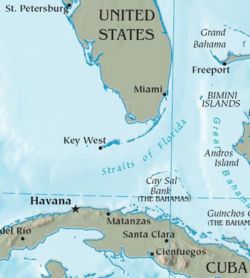
Cuba-Florida_map.jpgThis week, a very similar set of circumstances occurred, but thankfully for the occupants of the raft in distress, they were rescued by a cruise ship that was sailing near by. The Disney Fantasy, a cruise ship owned and operated by Disney Cruise, was sailing from Port Canaveral (Florida) to the Cayman Islands on May 26, 2012, when crew-members spotted a small raft near Key West, Florida, with four men aboard.
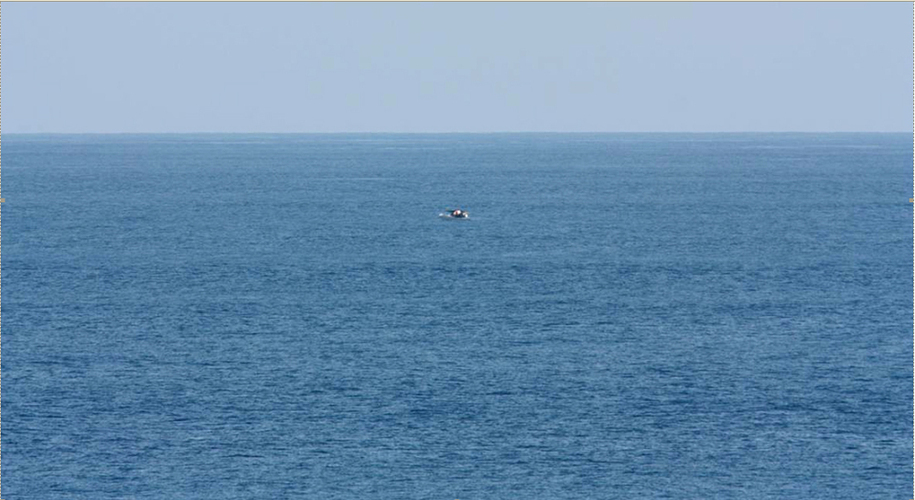

The ship quickly responded to its duties and rescued the men. “The men were brought aboard the ship and provided with medical attention along with food and water. We are proud of our Disney Fantasy crew members, who skillfully demonstrated their training and commitment to maritime protocols around saving lives at sea,” Disney Cruise Line said in a statement.

These developments are in stark contrast with what occurred last March when the Star Princess failed to rescue a drifting vessel, occupied by three men, including a minor, which eventually resulted in two deaths.

The Star Princess failed to follow Article 98 of the UNCLOS (The United Nations Convention on the Law of the Sea of 10 December 1982) which provides that a ship must render assistance to any person found at sea in danger of being lost.

The Star Princess crew was made aware of the drifting vessel by three cruise passengers, who, at the time. were bird-watching, when they spotted the vessel and its three occupants attempting to flag down the large cruise ship by waiving their white t-shirts. The witnesses showed the drifting vessel to a crew-member, they even let him use their bird-watching equipment to confirm the nature of the distress. The crew-member then advised the crew on the bridge of the ship in distress.

Despite the grave concern felt by those who saw the vessel adrift, for some inexplicable reason, the Star Princess did not render any assistance. It never deviated from its course. It never called the Coast Guard for help. It simply continued on with the cruise, to the next Port.
Continue reading

Published on:

Since the tragedy of the Costa Concordia occurred last January off of the coast of “Isola del Giglio”, Costa Cruise Lines has been in a public relations storm that seems never-ending.

Captain Francesco Schettino, the ultimate responsible person aboard the sinking ship, was arrested the day following the events.

This week, the Court of Cassation, the highest court in Italy, confirmed the lower court’s decision to maintain a house arrest order against Schettino. The decision is motivated by several factors that we have discussed in prior articles. Mainly, the Cassation’s judges believe that Schettino has shown little resilience in performing command function or in handling responsibility for the safety of persons under his care. The decision further explains that the Captain of the cruise liner proved to be unable to manage a crisis and to ensure the safety of his passengers and crew (by abandoning ship) and that there would be a risk of a repeat of the disaster if he were given command again. Ultimately, the Court of Cassation seems to agree with the criminal charges Schettino is now facing, which include multiple manslaughter, causing the accident, and abandoning ship.

As a result of the very public downfall of Captain Schettino, Costa Cruise Lines’ public relations’ policy has been very clear. Blame Schettino for his extraordinarily dangerous decisions as Captain and hope to deflect any and all responsibility from the cruise line company. That strategy might have worked initially, but new found information reveals that Costa Cruise may have a systemic problem at hand when it comes to safety practice.
Continue reading

Published on:

One hundred days have passed since the tragic events of the Costa Concordia which saw the confirmed death of 30 cruise passengers and the disappearance of 2 additional passengers whose bodies have yet to be found.

It took more than 100 days for the cruise industry to agree on three new safety measures. The announcement of the new policies by the cruise industry through Cruise Lines International Association (CLIA) and the European Cruise Council (ECC) is all over the print and digital media and looks more to be a public relations coup than addressing the true concerns and lessons that were learned from the events that led to the sinking and grounding of the Costa Concordia.

The first measure proclaims that cruise ships will now have more lifejackets aboard than are required by law; Limiting access to a ship’s bridge at potentially dangerous times; and requiring cruise ship routes to be planned in advance and shared with all members of the bridge team.

The second and third measures are directly addressing errors which may have contributed to the Costa Concordia’s demise. Last January, Captain Schettino had invited a female passenger to the ship’s bridge, which according to witnesses, distracted not only the Captain, but the rest of the bridge team.

One should wonder why it took over 100 days for the cruise industry to figure out that bringing passengers to the bridge of a ship when the captain and the bridge team are maneuvering the ship is a terrible idea. The third measure is equally baffling. Why did it take until April of 2012 to require a bridge team to agree the ship’s route before the ship sails and stick to the route? What has happened to common sense?
Continue reading

Published on:

The United Nations Convention on the Law of the Sea of 10 December 1982 applies to ships navigating in international waters.

Article 98 of the UNCLOS provides that (1) Every State shall require the master of a ship flying its flag, in so far as he can do so without serious danger to the ship, the crew or the passengers (a) to render assistance to any person found at sea in danger of being lost and; (b) to proceed with all possible speed to the rescue of persons in distress, if informed of their need of assistance, in so far as such action may reasonably be expected of him;

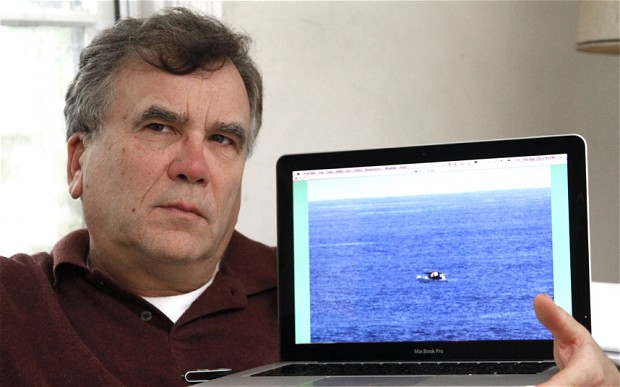
On March 10, 2012, Jeff Gilligan of Portland, Oregon, was on The Star Princess, a luxury cruise ship operated by Carnival Cruise Lines, based out of Miami, Florida. Jeff is an avid bird watcher and that day he was bird watching with two fellow cruise passengers, using their binoculars and spotting telescopes from one of the decks of the ship.

That is when Jeff and his two friends spotted a boat approximately one mile from the cruise ship. Using his binoculars, Jeff saw that the occupants on that small vessel were waving their t-shirts in the direction of the cruise ship. Jeff took a photo of the vessel.

birdwatch_boat_enl.jpg

Judy Meredith from Bend, Oregon, was with Jeff and told NPR: “We all watched him for a bit and thought, ‘This guy’s in distress. He’s trying to get our attention. And he doesn’t have a motor on his boat.’ We could see that.”

She then ran inside to alert the crew, but she only found a crew member who was with the ship’s sales team. The cruise employee contacted the bridge and the situation was relayed to the captain. Jeff Gilligan handed his telescope to another crew member to look at the drifting boat and he confirmed that he saw a boat in distress.

Jeff, Judy and the third bird-watcher thought the ship’s captain would either turn around to rescue the boaters or take the appropriate steps to ensure that the local authorities would conduct a rescue mission. Unfortunately, nothing was ever done.

Days after the cruise ended, Judy Meredith contacted Princess Cruise to inquire about what had happened to the boaters and the steps taken by the ship’s captain at the time. Judy’s tenacity was not something Princess Cruise was prepared for and several versions of the incident surfaced. The last version given by Princess was that cruise ship contacted the boaters in question, but rather than signaling for distress, they had been signaling for the ship to change course because they were afraid the large cruise ship would damage the boaters’ fishing nets. Also, Judy was told that what she mistakenly interpreted as boaters waving their t-shirts in a sign of distress was actually a sign of gratitude for having altered the ship’s course.
Continue reading

Published on:

Leesfield & Partners recently filed two lawsuits against Celebrity Cruises and Caribbean Water Sports for the wrongful death and catastrophic personal injuries sustained by two cruise passengers in St. Thomas, U.S. Virgin Islands.

To read more about the lawsuit against the cruise line and parasailing tour operator: Lawsuit Filed against Celebrity Cruises and Parasail Operator for the Wrongful Death of Cruise Passenger

Below is a news report broadcasted on the local CBS affiliate.


After this tragic incident, parasailing excursions, which were traditionally sold to passengers before a cruise on the cruise’s websites or during a cruise aboard the ship, were indefinitely suspended by the majority of the cruise lines, including Celebrity.

Celebrity Cruises, owner and operator of the ship Celebrity Eclipse, announced the cancellation of all parasailing excursions in the Caribbean indefinitely less than a week after the death of one of its passengers.

Celebrity’s Public Relations Department made sure that the announcement at the time was well-publicized and relayed in as many media outlets as possible. “All parasailing shore excursions in the Caribbean have been cancelled indefinitely, pending the outcome of the investigation,” said a Celebrity Cruises spokesperson.

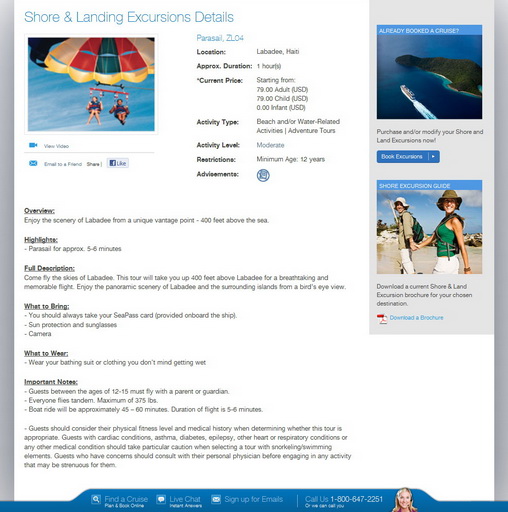
Celebrity Parasail.jpgIt was surprising today to find out that, with a simple search of Celebrity’s watersports activities, parasailing excursions are still being sold to cruise passengers.

While Celebrity’s PR Department made sure to that its announcement last November canceling all parasailing activities was published in every newspaper and relayed by every media outlet in the aftermath of the death of a Celebrity passenger, there has not been any news release or news conference announcing that parasailing excursions have resumed.

Celebrity has not communicated to members of the public and customers what its investigation revealed and the steps taken to ensure that such a tragedy does not occur again.

To read more about the dangers of parasailing and prior cases of parasail operator negligence: Lawsuit Filed against Parasail Operator in Wrongful Death of Cruise Passenger
Continue reading

Badges
Contact Information